The uncomfortable reality
You think deals are won in demos, negotiations, or pricing discussions.
They’re not.
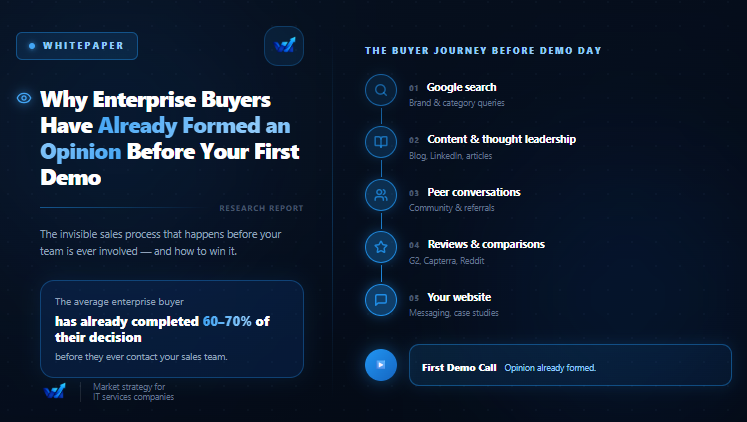
By the time your sales team speaks to a prospect, the buyer has already:
- formed a perception of your credibility
- compared you with competitors
- decided whether you’re worth serious consideration
What happens in the first 48 hours after a lead engages is what determines all of that.
And most companies completely waste this window.
Drive Real Marketing Results That Matter
We turn leads into predictable revenue for growing brands.
What actually happens in those 48 hours
When a potential buyer shows interest downloads something, fills a form, or clicks an ad they enter an evaluation phase immediately.
They don’t wait for your sales team.
They start:
- researching your company
- checking your website depth and clarity
- comparing your positioning with alternatives
- looking for proof (case studies, results, authority)
If your system doesn’t guide that journey, the buyer builds their own narrative.
And that’s where you lose control.
Why most companies lose deals before sales
1. Slow or nonexistent follow-up
Speed isn’t just about being fast it’s about being present while intent is high.
Most companies:
- respond after 24–72 hours
- send generic follow-ups
- rely on manual outreach
By then, the buyer has already moved on or formed a bias.
This is exactly why deals are lost in silence before they even start
2. No structured first-touch experience
What does a lead see immediately after engaging?
In most cases:
- a generic thank-you page
- no guided next step
- no narrative about why they should care
You’re leaving the most important moment to chance.
3. Weak or invisible positioning
If your messaging is unclear, the buyer fills the gap themselves.
They ask:
- What do you actually do better?
- Who are you for?
- Why should I trust you?
If that’s not obvious within minutes, you’re already out.
This is the same root issue behind why most B2B marketing fails to generate real revenue
4. No trust-building assets
Before speaking to sales, buyers look for proof.
If they don’t find:
- real case studies
- clear outcomes
- relevant examples
They downgrade you mentally.
Strong companies control this through structured proof like case studies
5. Disconnected systems
Your CRM, website, emails, and outreach are not connected.
So what happens?
- leads fall through gaps
- messaging is inconsistent
- timing is off
- sales lacks context
This is why your pipeline looks active but doesn’t convert
The real problem: you don’t control the pre-sales phase
Most companies think sales owns the deal.
In reality, marketing + systems own the first 50% of the decision.
That’s the 48-hour window.
If that part is broken, sales is just dealing with:
- low intent leads
- confused buyers
- poorly qualified opportunities
Which is why your sales team feels like the problem but isn’t.
What high-performing companies do differently
They don’t wait for sales to start the process.
They engineer the first 48 hours.
1. Immediate, structured engagement
Within minutes not days the lead gets:
- a relevant follow-up
- clear next steps
- contextual messaging
Not generic emails. Not delays.
2. Guided buyer journey
They don’t leave discovery to chance.
They direct it:
- what to read
- what to watch
- what to understand next
So the buyer moves in the right direction, not randomly.
3. Clear positioning and differentiation
From the first interaction, it’s obvious:
- who this is for
- what problem is being solved
- why this is different
No ambiguity.
4. Integrated systems
Everything is connected:
- CRM
- automation
- website behavior
- outreach
So every action builds momentum instead of losing it.
This is exactly what a real revenue system looks like
5. Qualification before sales
Sales doesn’t waste time figuring things out.
By the time a conversation happens:
- intent is clear
- context is known
- priority is set
Which is why conversion rates increase without increasing leads.
What this changes in your business
When the first 48 hours are structured correctly:
- lead quality improves without changing acquisition
- sales cycles shorten
- conversion rates increase
- forecasting becomes more reliable
You stop chasing deals.
You start controlling them.
How WithKVG fixes this
At WithKVG, we don’t optimize campaigns—we build the system that controls what happens before sales ever starts.
We focus on structuring the entire early-stage journey: how leads are captured, how they are engaged immediately, how messaging guides their evaluation, and how systems ensure no opportunity is lost in the gap between marketing and sales. The goal is simple—by the time your sales team speaks to a prospect, the deal is already moving forward, not starting from zero.
If you want to see how this works in practice, explore our approach here
Or book a strategy session
Final insight
Most companies are trying to improve sales performance.
But they’re ignoring the part of the journey where decisions are actually shaped.
Deals are not won in the sales call.
They are won or lost in the 48 hours before it.
Ready to predict revenue with confidence?