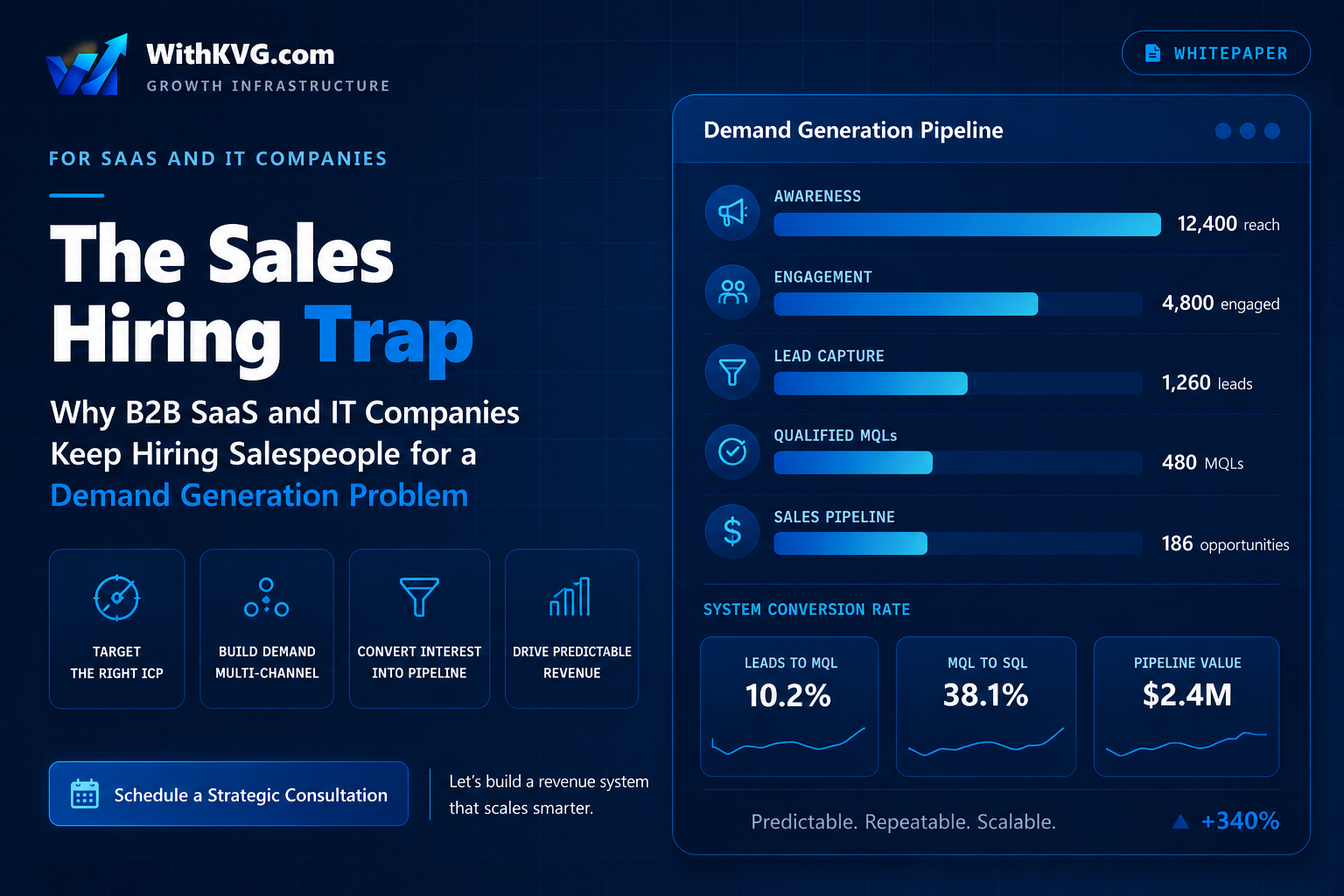
















The Hidden Revenue Gap Between Marketing Metrics and Sales Reality (Why Your KPIs Are Lying to You)

Most B2B companies think scaling is a lead problem. It’s not. When lead volume increases, broken systems get exposed CRM gaps, weak qualification, and sales bottlenecks. This article breaks down why your revenue system collapses under growth and how to fix it before scaling further.

Introduction

Most CEOs are being misled by their dashboards.

Marketing reports show growth:

  • more leads
  • lower CPL
  • higher engagement

But revenue doesn’t follow.

So the question becomes uncomfortable:
Are we actually growing or just reporting activity?

The truth: most marketing systems are optimized for visibility, not revenue.

Drive Real Marketing Results That Matter

We turn leads into predictable revenue for growing brands.

Why Marketing Metrics Create False Confidence

Marketing teams optimize what is easiest to measure:

  • clicks
  • impressions
  • conversions to lead forms

But none of these guarantee revenue intent.

So you end up with:

  • inflated pipeline
  • weak opportunities
  • misleading performance reports

The Disconnect Between Marketing and Sales Reality

Sales teams operate in a different truth:

They care about:

  • deal quality
  • decision-maker access
  • urgency and intent

But marketing delivers:

  • volume without context
  • leads without qualification
  • traffic without intent

This gap is where revenue dies quietly.

The 3 Places Where Revenue Actually Breaks

1. Attribution Blindness

You don’t know what actually drives closed deals.

2. Lead Quality Illusion

High lead volume hides low intent.

3. Pipeline Inflation

CRM looks healthy, but deals are not real opportunities.

Why More Marketing Spend Doesn’t Fix It

Increasing budget only amplifies the problem:

  • more low-quality leads
  • more noise in CRM
  • more sales frustration

Because you are scaling the wrong system.

What High-Performing B2B Companies Do Differently

They stop optimizing for marketing metrics and shift to:

  • revenue-based KPIs
  • lead qualification systems
  • unified CRM visibility
  • sales + marketing alignment loops

They don’t track “marketing performance.”
They track “revenue conversion efficiency.”

The Fix: Build a Revenue Truth Layer

This is what separates predictable companies from chaotic ones:

  • one source of truth (CRM + revenue system)
  • clear qualification logic
  • tracked journey from lead → deal → revenue
  • shared KPIs across teams

Without this layer, you are always guessing.

How WithKVG Helps

At WithKVG, we fix the gap between marketing activity and revenue by rebuilding the system underneath it from ICP and positioning to CRM structure, lead qualification, and sales alignment. Instead of optimizing for clicks or leads, we design revenue-driven pipelines where every marketing action is tied to measurable pipeline impact, giving CEOs clear visibility into what is actually driving growth.

Conclusion

Marketing is not broken.

Your interpretation of performance is.

Until marketing metrics are tied directly to revenue outcomes, growth will remain an illusion.

Ready to predict revenue with confidence?

More From WithKVG

FAQs

Why do marketing metrics look good but revenue stays flat?
Because most marketing KPIs measure activity, not buying intent or sales conversion quality.
What is the difference between marketing performance and revenue performance?
Marketing performance tracks engagement, while revenue performance tracks closed deals and actual cash generation.
How do I know if my marketing data is misleading?
If lead volume is increasing but sales conversion is not improving, your metrics are disconnected from revenue reality.
What causes the gap between marketing and sales results?
Poor attribution, weak lead qualification, and lack of shared KPIs between teams.
How do companies fix the marketing-to-revenue gap?
By building a unified revenue system that connects marketing data directly to sales outcomes through CRM and shared reporting.

Resources & Insights

Scroll to Top