










Why Your Best Salesperson Can't Scale Your SaaS or IT Company
The Hidden Revenue Dependency Holding Jordanian B2B Technology Companies Back
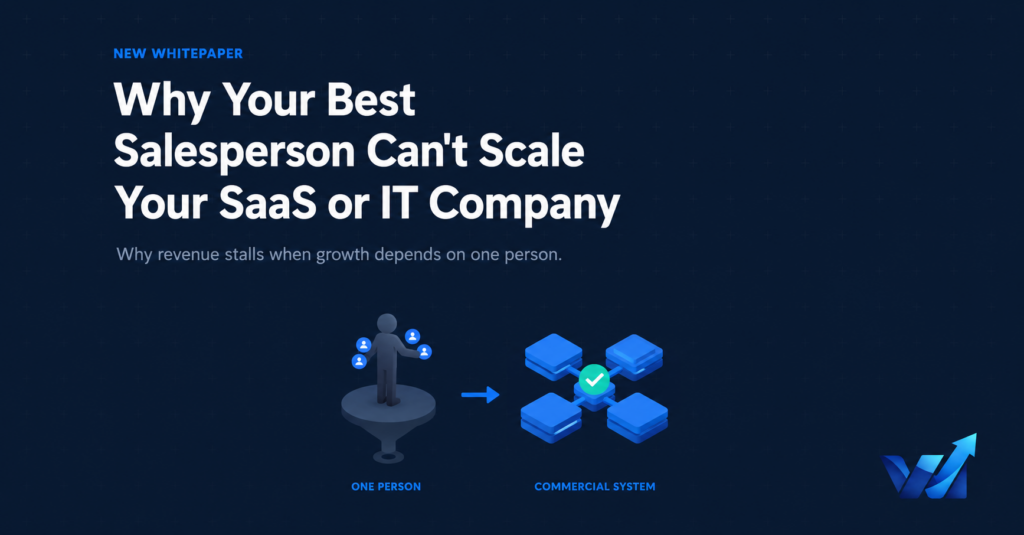
Table of Contents:
Introduction: The Hidden Cost of Duplicate Data
For many SaaS and IT companies, growth starts with one person.
The founder lands the first customers.
A talented salesperson builds strong relationships.
Referrals generate new business.
At first, this approach works.
But over time, something changes.
The business becomes dependent on individuals instead of systems.
This creates a hidden growth ceiling.
As the company grows, it becomes increasingly difficult to generate predictable revenue because every opportunity depends on the same people.
The companies that scale successfully don’t simply hire better salespeople.
They build commercial systems that consistently create opportunities before a salesperson ever joins the conversation.
Why Your Best Salesperson Cannot Scale Your Company
A great salesperson can:
- Build trust quickly.
- Handle objections.
- Understand customer needs.
- Close complex opportunities.
- Strengthen customer relationships.
However, even the best salesperson cannot:
- Educate an entire market.
- Build long-term brand awareness.
- Rank your company on Google.
- Make your business visible in AI search.
- Produce educational content.
- Build executive credibility.
- Generate inbound demand every day.
- Nurture hundreds of opportunities simultaneously.
These activities require systems.
Not individuals.
Key Insight
Salespeople close revenue.
Commercial systems create revenue.
Signs Your Company Has a Revenue Dependency
Ask yourself the following questions.
Sales
- Does the founder still close most enterprise deals?
- Does one salesperson own your biggest customers?
- Does pipeline slow when someone is unavailable?
- Do referrals generate most new business?
Marketing
- Does your website generate very few qualified meetings?
- Are LinkedIn activities inconsistent?
- Is there little educational content?
- Is inbound demand unpredictable?
Brand
- Are customers more familiar with individuals than the company?
- Are case studies limited?
- Is executive thought leadership missing?
- Is your positioning unclear?
Operations
- Is your CRM incomplete?
- Are follow-ups managed manually?
- Does sales knowledge exist only inside people’s heads?
- Are forecasting reports unreliable?
If you answered “Yes” to several of these questions, your business is likely dependent on people rather than systems.
Why Hiring More Salespeople Is Not the Answer
Hiring additional salespeople increases capacity.
It does not automatically increase demand.
Without marketing systems, every new salesperson starts from zero.
They must:
- Find prospects.
- Build awareness.
- Establish credibility.
- Answer the same questions.
- Create trust.
- Generate their own opportunities.
Instead, businesses should focus on creating demand before sales engagement.
Compare These Two Companies
| Company A | Company B |
|---|---|
| Depends on referrals | Generates consistent demand |
| Founder drives sales | Commercial system drives growth |
| Weak website | High-converting website |
| Limited content | Educational content library |
| No executive branding | Active executive LinkedIn presence |
| Minimal SEO | SEO + GEO + AEO strategy |
| Manual follow-up | CRM automation |
| Unpredictable pipeline | Predictable pipeline |
Which company will scale faster?
The answer is almost always Company B.
The 7 Components of a Scalable Commercial System
1. Positioning
Every buyer should immediately understand:
- Who you help.
- Which industries you serve.
- What business challenges you solve.
- Why your company is different.
2. Website
Your website should:
- Build trust.
- Educate buyers.
- Showcase expertise.
- Present customer success stories.
- Generate qualified consultations.
3. Demand Generation
Growth should not depend solely on referrals.
Generate demand through:
- Whitepapers.
- LinkedIn.
- Case studies.
- Educational articles.
- Webinars.
- Email nurturing.
- Account-Based Marketing (ABM).
4. Executive LinkedIn
Enterprise buyers trust people before companies.
Executive thought leadership helps:
- Increase visibility.
- Build authority.
- Educate decision-makers.
- Create trust before meetings.
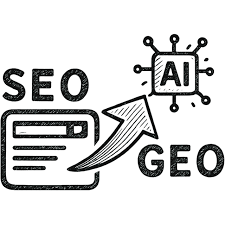
5. SEO, GEO & AEO
Enterprise buyers now search through:
- Google.
- ChatGPT.
- Gemini.
- Perplexity.
- Other AI-powered search experiences.
Your business needs to appear wherever buyers search.
6. CRM & Buyer Nurturing
A CRM should:
- Track opportunities.
- Automate follow-ups.
- Support forecasting.
- Improve collaboration.
- Maintain long buying cycles.
7. Analytics
Measure what matters.
Track:
- Website conversions.
- Qualified opportunities.
- Sales pipeline.
- Campaign performance.
- Industry conversion rates.
- Revenue attribution.
- Customer acquisition trends.
Building a Predictable Revenue Engine
Successful companies connect every commercial activity into one system.
A scalable buyer journey looks like this.
Positioning
↓
Website
↓
Educational Content
↓
SEO + GEO + AEO
↓
Executive LinkedIn
↓
Demand Generation
↓
CRM
↓
Sales
↓
Customer Success
↓
Referrals
Every stage strengthens the next.
Common Mistakes Jordanian SaaS & IT Companies Make
Many companies unknowingly limit their own growth by:
- Relying almost entirely on referrals.
- Depending on founders to generate sales.
- Treating websites as brochures.
- Publishing little educational content.
- Ignoring executive branding.
- Neglecting SEO and AI search visibility.
- Using CRM only as a contact database.
- Measuring activities instead of outcomes.
Action Plan for CEOs
Start by asking these five questions.
✓ Can our website generate qualified opportunities without referrals?
✓ Would buyers understand our value proposition in less than 30 seconds?
✓ Can prospects discover us through Google and AI search?
✓ Does our executive team consistently build market trust?
✓ Could our pipeline continue growing if one key salesperson left tomorrow?
If several answers are “No,” your commercial system needs strengthening.
How WithKVG Helps
WithKVG helps B2B SaaS and IT companies build predictable revenue systems.
Our approach includes:
Strategy
- Market positioning.
- ICP development.
- Messaging.
- Revenue planning.
Demand Generation
- Executive LinkedIn.
- Whitepapers.
- Content marketing.
- ABM.
- Email outreach.
Digital Growth
- Website optimisation.
- SEO.
- GEO.
- AEO.
Sales Enablement
- CRM implementation.
- Automation.
- Reporting.
- Analytics.
- Performance dashboards.
Instead of relying on exceptional individuals, we help companies build systems that generate opportunities consistently.
Conclusion
Exceptional salespeople are valuable.
But they should never become the foundation of your growth strategy.
The businesses that scale successfully build systems that continue generating demand regardless of who is available.
When positioning, websites, content, search visibility, executive branding, CRM, analytics, and sales work together, growth becomes repeatable.
People create momentum.
Systems create scale.
Frequently Asked Questions
Because many depend on founders, referrals, or a small number of salespeople rather than a structured commercial system.
A commercial system connects positioning, demand generation, websites, executive branding, SEO, GEO, AEO, CRM, sales enablement, and analytics into one repeatable revenue engine.
Additional salespeople increase selling capacity, but they cannot replace consistent market visibility, buyer education, and predictable demand generation.