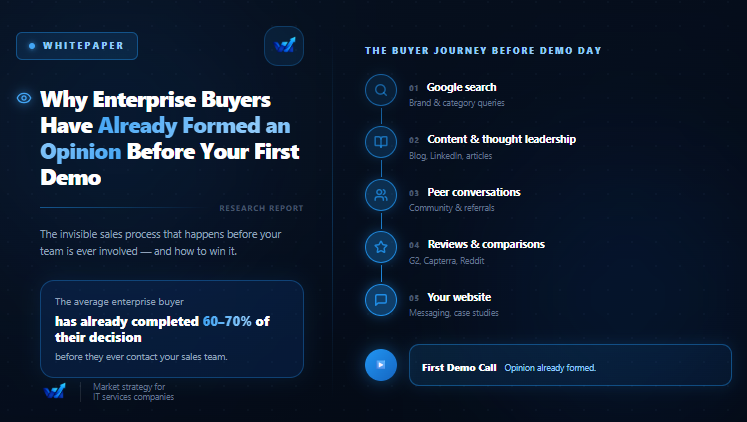
Why Great Products Still Struggle to Win B2B Deals
Many startup founders believe that if the product is good enough, buyers will come.
The reality is very different.
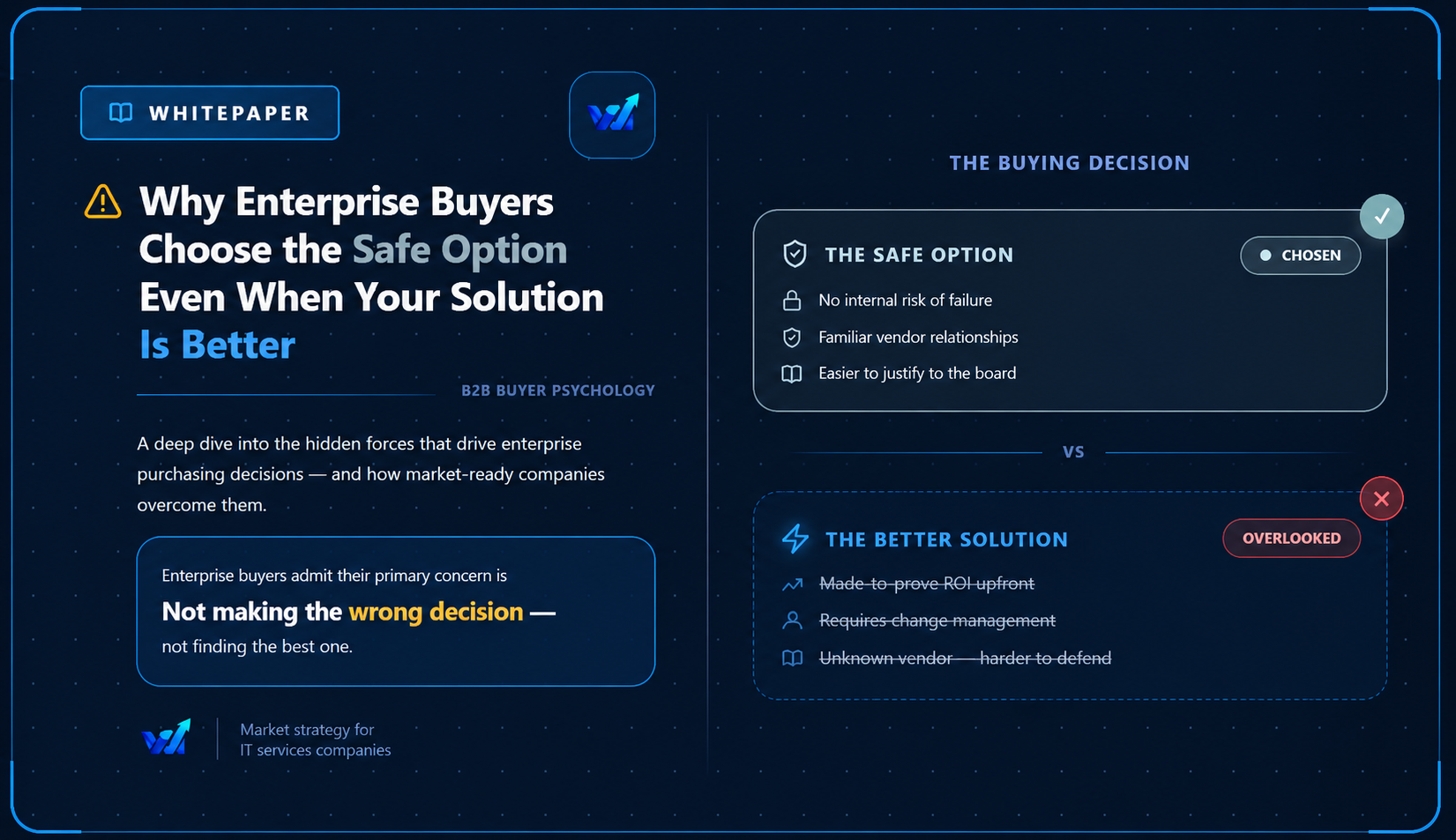
In B2B SaaS and IT services, buyers are not only evaluating your solution. They are evaluating the risk of working with your company.
When a prospect discovers your business, they immediately start asking questions:
Can this company actually deliver?
Do they have experience in my industry?
Will they still be here in two years?
Have they solved similar problems before?
Can I trust them with my business?
If those questions are not answered quickly, the deal often stalls before a sales conversation even begins.
This is why trust has become one of the most important growth assets for modern B2B companies.
Drive Real Marketing Results That Matter
We turn leads into predictable revenue for growing brands.
Why Established Companies Have an Advantage
Large organizations have something startups do not:
- brand recognition
- market presence
- existing customer bases
- public credibility
- years of history
A startup enters the market without any of those advantages.
That means trust cannot be assumed.
It must be built intentionally.
The good news is that trust can be engineered.
The companies growing fastest today are not necessarily the oldest companies.
They are the companies that remove uncertainty for buyers.
The Five Trust Signals Every B2B Startup Needs
1. A Clear Positioning Strategy
One of the biggest mistakes startups make is trying to serve everyone.
When visitors land on your website, they should immediately understand:
- who you help
- what problem you solve
- why you are different
Generic messaging creates doubt.
Clear positioning creates confidence.
For example:
“We help B2B SaaS companies build predictable revenue systems.”
is stronger than:
“We provide innovative marketing solutions.”
The more specific the positioning, the faster trust develops.
2. Proof of Execution
Buyers want evidence.
Not promises.
This is why case studies are among the most powerful trust-building assets in B2B marketing.
A strong case study demonstrates:
- the challenge
- the solution
- the implementation
- the outcome
Even early-stage companies can create proof by documenting projects, pilot programs, customer wins, and measurable results.
Trust grows when prospects see that others have already succeeded with you.
3. Consistent Thought Leadership
Many startups remain invisible because they only talk when they want to sell something.
Buyers pay attention to companies that consistently share expertise.
This includes:
- educational content
- industry insights
- strategic frameworks
- lessons learned
- market analysis
Thought leadership allows prospects to experience your expertise before they become customers.
By the time they book a meeting, much of the trust-building process has already happened.
4. A Professional Digital Presence
Many B2B buyers will visit your website multiple times before contacting you.
They may also review:
- LinkedIn profiles
- company pages
- blog content
- resources
- customer stories
An outdated website or weak digital presence creates friction.
A professional online presence communicates stability and credibility.
5. Consistent Follow-Up and Communication
Trust is built through consistency.
When leads submit a form or schedule a call, they expect timely communication.
Delayed responses create uncertainty.
Structured CRM workflows, automated nurturing, and organized follow-up systems help startups maintain professionalism even with small teams.
Why Most Startups Focus on the Wrong Things
Many startups invest heavily in:
- logos
- branding exercises
- social media followers
- vanity metrics
While ignoring the real factors that influence buying decisions.
The goal is not to appear bigger.
The goal is to appear trustworthy.
Trust comes from:
- clarity
- proof
- expertise
- consistency
- visibility
Not from looking like a large corporation.
How WithKVG Helps B2B SaaS and IT Startups Build Trust Faster
At WithKVG, we frequently work with companies that have strong products but struggle to generate confidence in the market.
The challenge is rarely the solution itself.
The challenge is communicating credibility at every stage of the buyer journey.
We help companies build trust through:
Strategic Positioning
We define exactly how your company should be positioned to stand out in competitive B2B markets.
Authority-Driven Content
We create content systems designed to demonstrate expertise and answer the questions buyers ask before purchasing.
Case Study Development
We help transform project outcomes into trust-building assets that support sales conversations.
SEO, AEO, and GEO Optimization
We ensure prospects can discover your company when searching through traditional search engines and AI-powered platforms.
CRM and Follow-Up Systems
We help startups build processes that create consistent communication and improve buyer confidence.
The result is a stronger trust foundation that supports lead generation, sales, and long-term growth.
The Future of B2B Growth Is Trust
As markets become more competitive, buyers become more cautious.
The companies that win are not always the cheapest.
They are not always the biggest.
They are the companies that reduce perceived risk.
For startups, trust is often the most valuable growth asset available.
The faster you build it, the easier it becomes to generate opportunities, shorten sales cycles, and close deals.
Ready to predict revenue with confidence?