










How SaaS and IT Companies Build a Predictable Demand Generation System That Actually Produces Sales Pipeline
Table of Contents:
Introduction Why Marketing Activity Does Not Create Predictable Revenue
Most SaaS and IT companies invest heavily in marketing activities such as advertising, content creation, SEO, and outbound campaigns.
These efforts often generate visibility and leads.
However, most leadership teams still face the same problem:
revenue remains unpredictable.
The issue is not lack of activity.
The issue is lack of a structured demand generation system.
Why Most SaaS and IT Companies Fail at Demand Generation
The failure happens because marketing is treated as a set of disconnected activities rather than a unified system.
Common symptoms include:
- inconsistent lead flow
- poor lead quality
- unpredictable sales pipeline
- high dependency on referrals
- weak forecasting accuracy
Without structure, demand becomes random instead of repeatable.
The Difference Between Lead Generation and Demand Generation
Lead Generation
Focuses on:
- volume
- form fills
- campaigns
- short term results
It answers:
“How many leads did we get?”
Demand Generation
Focuses on:
- buyer intent
- market education
- ICP targeting
- pipeline consistency
It answers:
“Are we creating predictable revenue opportunities?”
Most companies fail because they optimize for the wrong outcome.
The 5 Core Components of a Predictable Demand System
1. ICP Precision Engine
A demand system starts by defining exactly who is likely to buy and why.
Without ICP clarity, every marketing effort becomes inefficient.
2. Messaging and Positioning Layer
Messaging must align with real business pain, not product features.
Strong messaging increases:
- conversion rate
- engagement quality
- sales velocity
3. Multi Channel Demand Engine
A predictable system uses multiple synchronized channels:
- search visibility
- LinkedIn engagement
- outbound outreach
- retargeting
This creates compounding demand instead of isolated spikes.
4. Conversion Architecture
Traffic is useless without conversion structure.
This includes:
- landing pages
- call to action strategy
- qualification flow
- booking system design
5. CRM and Revenue Feedback Loop
The system must track:
- source of leads
- pipeline progression
- conversion rates
- closed revenue
Without this layer, optimization is impossible.
Why ICP Precision Is the Foundation of Revenue Growth
Most companies target:
- industries
- company sizes
- general segments
But predictable demand requires targeting:
- buying intent
- urgency signals
- operational pain
- budget readiness
Without precision, marketing efficiency collapses.
How Messaging Controls Lead Quality and Sales Conversion
Messaging determines:
- who engages
- who converts
- who becomes a qualified opportunity
Weak messaging creates:
- high volume low quality leads
- misaligned expectations
- sales friction
Strong messaging filters demand before it enters the pipeline.
Why Multi Channel Systems Outperform Single Channel Marketing
Single channel strategies fail because:
- algorithms change
- costs increase
- saturation occurs
Multi channel systems create:
- stability
- redundancy
- compounding visibility
This leads to predictable inbound flow.
How Conversion Architecture Impacts Pipeline Consistency
Even strong demand fails without conversion structure.
Most companies lose deals because:
- response time is slow
- qualification is unclear
- CTAs are weak
- follow-up is inconsistent
Conversion is a system design problem, not a sales talent issue.
Why CRM Alignment Determines Revenue Predictability
If CRM is not aligned with marketing:
- attribution becomes unclear
- pipeline visibility disappears
- forecasting becomes unreliable
A demand system must connect:
marketing → CRM → sales → revenue
Otherwise, optimization is impossible.
The Most Common Mistakes in Demand Generation Systems
Most companies fail because they:
- focus only on lead volume
- ignore ICP definition
- separate sales and marketing systems
- do not track revenue attribution
- rely on one channel only
These mistakes create unstable growth.
What a Fully Functional Demand System Looks Like in Practice
A working system produces:
- consistent qualified pipeline
- predictable conversion rates
- clear revenue attribution
- stable sales forecasting
- reduced dependency on referrals
Growth becomes measurable and repeatable.
How WithKVG Builds Predictable Demand Systems for SaaS and IT Companies
WithKVG does not run isolated marketing campaigns.
We build structured demand systems including:
- ICP and positioning architecture
- demand generation strategy and execution
- LinkedIn and outbound systems
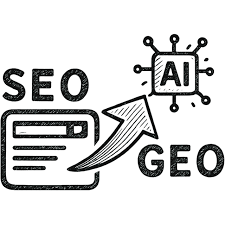
- SEO and GEO intent capture
- CRM integration and revenue tracking
Explore:
https://withkvg.com/solutions/demand-generation-digital-marketing/
https://withkvg.com/solutions/automation-crm-revenue-optimization/
https://withkvg.com/solutions/strategy-growth-foundation/
https://withkvg.com/case-studies/
Conclusion From Unpredictable Leads to Predictable Revenue
Most SaaS and IT companies do not fail because of lack of demand.
They fail because demand is not structured.
Once a proper demand generation system is implemented, revenue becomes predictable, scalable, and controllable.